Monday, 11 March 2013

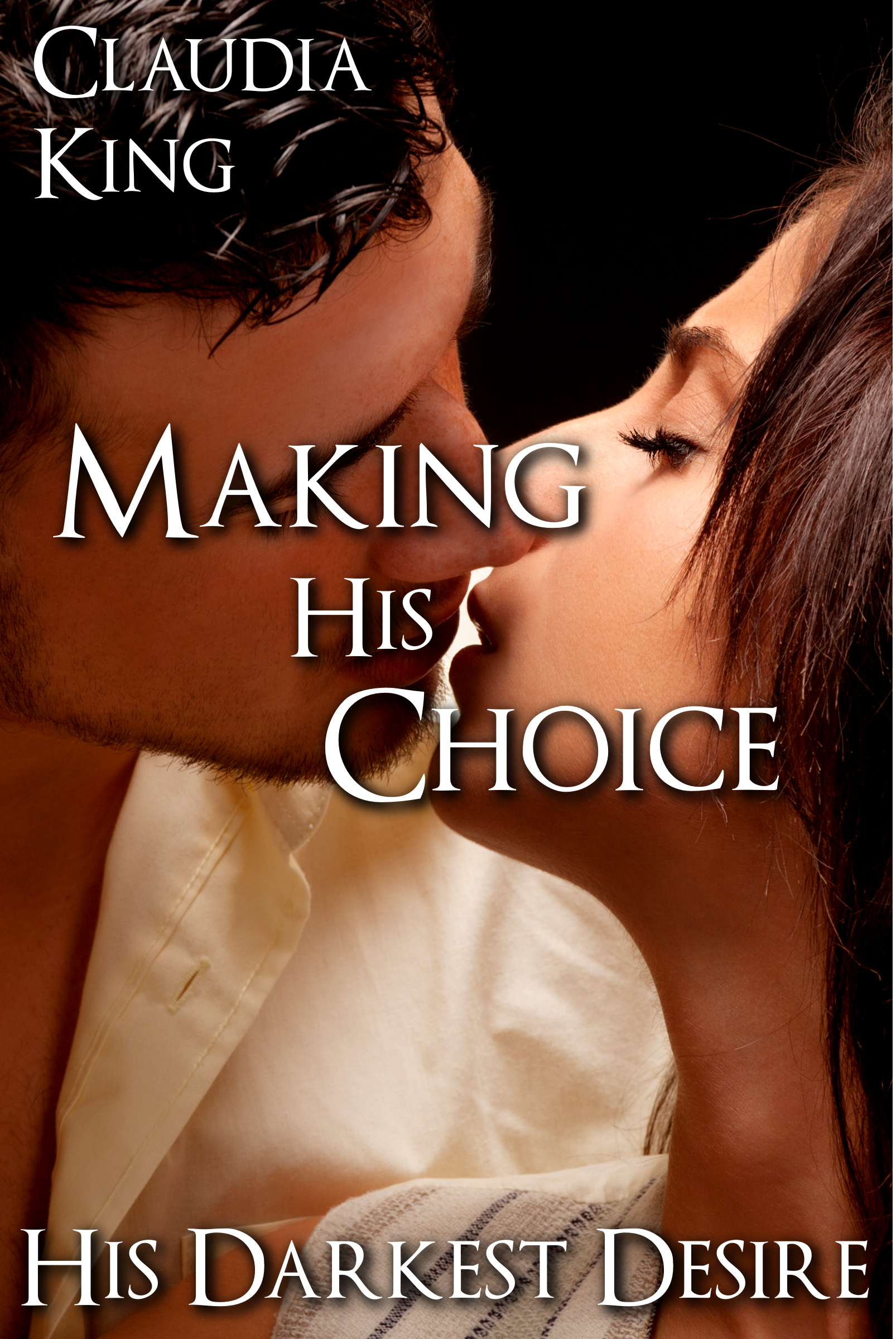
Making His Choice Published!

Woo! His Darkest Desire is finally complete! Check out the final chapter now on Amazon and Smashwords!

Faced with Marcia's terrible ultimatum, Nina finds herself trapped between two heartbreaking choices about her future. Is there some way she can outwit Elliot's spiteful ex-lover, or will she be forced to sacrifice her relationship to protect the man she loves?
But Nina's Master has his own choice to make. Can the pair of them finally be happy together? Or will Marcia's interference force them apart once and for all?

All totalled, the complete series finished up at something like 57000 words, with this last chapter being the longest at 9700. Technically that's still 3000 words short of what most people classify as novel-length, but gosh darn it, it's close enough!

So I'm a published novelist now! It's funny to think that six months ago I was barely just starting to dabble in one-off erotic shorts, scraping together a few dollars a month and hoping all my effort would pay off. I've passed a lot of milestones since then, but, on a personal level, I feel like this is the biggest one. His Darkest Desire was never exactly the book of my dreams to start with (I never even thought of it in terms of a novel at first), but it's carved out its own little niche in my career as a writer, and I'm proud to have finally finished it.

If you'd told me a year ago that in twelve months I'd have written an erotic novel, and would be making actual money off it, I think my mind would've been pretty blown. I'm still finding it hard to wrap my head around the idea that I'm a professional writer now. Of course, I'm not making the big bucks yet, but 2013 has been a good year so far. I'm starting to edge over the line of making a liveable income from my writing, and despite some inconsistency on the Amazon sales, I'm hoping to finish the year with a reliable monthly salary coming into my bank account.

I suppose this was a bit of a reflective personal post for me, but it's an appropriate time to reflect!
Coming down the pipeline in March will be more chapters of Wild Instincts (which will become my main writing focus now), and in the background I'll be re-editing His Darkest Desire in preparation for publishing the complete series as a novel at some point in the future.

Monday, 4 March 2013

Character vs Plot

I've been neglecting the blog again! Bad Claudia!
Don't worry though, I've been busy on the concluding part of His Darkest Desire, and if all goes well it should be ready to publish in a few short days.

Anyway, just now I bumped into a thread on Kindleboards about character vs plot, and I thought it might make a great jumping off point for a blog post!

At first glance it might seem as though character and plot are two equal partners in the process of storytelling. Certainly, it's pretty gosh-dang impossible to have any semblance of one without the other when you're writing fiction, but I'm a firm believer in one of these elements vastly overshadowing the other in its importance. Can you guess which?

When I was a student, I vividly remember one particular lecture on creative writing where our tutor turned to the class and asked us: "What's the most important part of a story?"
She got a bunch of vague and nondescript answers (I think my own was something like "a gripping story", duh), but nobody gave her the one she was looking for. It was, of course, character. Characters are the foundation upon which any good story is built, and understanding why involves looking carefully at the fundamental reasons behind why we read fiction in the first place. Certain genres all have their different niches, but a big part of what motivates us as human beings (not just to read, but to pursue any activity in life) is to experience emotion. The best stories are always the ones that make us laugh out loud, or break down crying, or punch the air in triumph, or that follow us around for days haunting our thoughts.

The vehicle for all of those emotions is character. Characters allow us to get sucked into the story. They provide a relatable reference point from which we can vicariously experience the events of a story through human eyes. It's almost impossible to tell a story without there being some kind of character there for the reader to latch on to. Even if I wrote a simple sentence like:
The pebble rolled down the hill.
I'm willing to bet most people after reading that would be thinking of the pebble as the focal point of the story. It's rolling down a hill, going on a journey. Where will it end up? What started it rolling?
Even a pebble can become its own character when we need a point of reference from which to ground our understanding of a story.

The most important thing I took away from those classes in university was this: A good story does not need to have a good plot if it has strong characters. 
Even if the events happening around those characters lack consistency or structure -- even if they're just a jumbled mix of "things happening" with little rhyme or reason -- we can still experience the emotional engagement of putting ourself in the characters' shoes and following them through their personal arcs. It's caring about characters that makes us keep turning the pages over and over again.

A good example I can think of would be Anne Rice's Interview with the Vampire. I can't for the life of me remember what the plot of that book was about -- or if there even was much of a plot. There are small subplots, and a general theme of "Louis travels the world trying to find out more about vampires", but there's no intricately woven narrative unfolding across the book as a whole. The novel is very much focused on Louis as a character, and how he adapts, changes, and copes with his existence as an undead creature of the night. Everything else that happens is just a vehicle to stimulate Louis's development. When a character has such a strong and emotionally complex arc that they become a microcosm of a plot in themselves, it really doesn't matter all that much what is going on in the world around them.

But of course, that isn't to say that plot is something you can just toss by the wayside if you have strong characters. Even though a story can survive on characters alone, it will always be better if the plot is up to standard as well. Whodunnit mysteries can keep you up late at night with a devilishly gripping plot -- but the important thing to remember is that they wouldn't be nearly as compelling if the characters hadn't made you care about whodiddit in the first place.

I like to summarise it by saying that plot is what makes a story interesting, but character is what makes it engaging. History books and news reports are interesting, but stories with heroes, villains, emotional depth and heart-wrenching conflict are the ones that will stay with you forever. We need characters for that kind of engagement, and they should always be the building blocks for any story.
Sunday, 24 February 2013

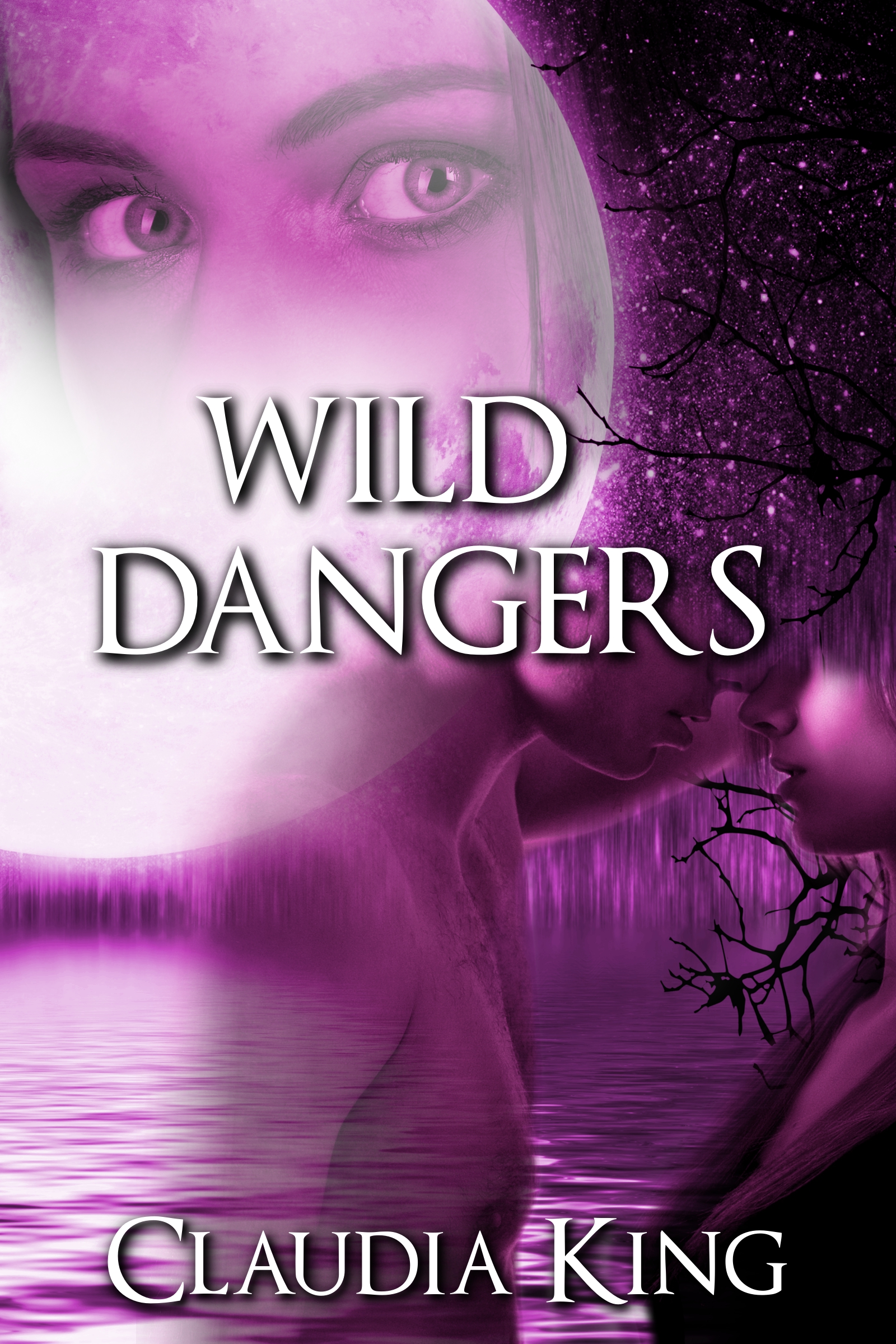
Wild Dangers Published!

Part three of Wild Instincts is up and ready to go on Amazon and Smashwords! Character development, emotions, drama, tension, sex, oh my!

After spending the night together, Lyssa and Hawthorne are forced to put their feelings for one another aside as they return to everyday life amongst the pack. But a heartbreaking reminder of Lyssa's human past is waiting to draw the pair together again. Forced to wrestle with her feelings towards Thorne, her alpha, and her old life, the young werewolf soon finds herself on a dangerous path of defiance once again.
Even with her instincts under control, there are other threats lurking out in the woods.

I'm really looking forward to carrying this one on. It's not just a sexy romp, but a proper story that I'm excited to see unfold as the series progresses. After the fourth instalment is out in a few weeks time I'm looking to start promoting Wild Instincts a lot by making the first chapter free, and then hopefully getting some more reader feedback. Fingers crossed!
The series will probably end up being close to nine parts in total, but still longer than His Darkest Desire due to the comparatively lengthy chapters I'm putting out. At a rough estimate, I'd expect it to be completed around May some time.

But before all of that it's time to finish up His Darkest Desire once and for all! This week I'll be sitting down to write the final chapter. It's kind of exciting! Once the series concludes I'll be spending some time in March to go back and re-edit the entire thing, correct a bunch of those naughty commas, wrangle a few dialogue tags, cut out some superfluous sentence fragments, and generally give the whole thing a bit of a facelift in preparation for publication as a complete novel. I've no idea when that'll be coming out though, probably a couple of months down the line.

So I've got a lot on my plate! But even with all of that to work on, I'm still going to need some fresh stories to fill the gap once my first eRom concludes. Nothing's set in stone yet, but I have had an idea for an erotic serial about the life of a concubine in a period/low-fantasy setting. One of my favourite books has a similar plot, and I'd love to have a go at something similar with the sex ramped up to eleven!

Tuesday, 19 February 2013

Structuring Sexy Serials

I once heard of an erotica publisher who would read through the first three chapters of a prospective novel, and if there was no sex to be found by that point, it went in the trash.

But what's a good amount of sex in an erotic serial? One of the biggest challenges for me in writing His Darkest Desire, and Wild Instincts has been to find a balance between sex and story that feels organic. It's a tricky one, because I feel obliged to have at least one fleshed out sex scene in every chapter, but I doubt even the smuttiest of novels have that much sex in them. At times it can feel like the sex is contrived or shoe-horned, at least to me. But it's got to be there. If someone buys a chapter of an erotic serial and finds it completely sexless, I'd fully expect them to ask for a refund.

This is proving especially tricky for me in my werewolf eRom. Even though I've set up a convenient plot device whereby sex is a pretty mandatory part of everyday life for the heroine, it still feels weird for me to throw her into erotic encounters in every single chapter. So I've been trying to differentiate a bit. Sex doesn't necessarily have to be sex, and there are plenty of erotic situations that can occur without tab A having to be inserted into slot B. I'm going to play with things like erotic dreams (the perfect excuse for sexy sex without needing any justification for it in the plot - and a handy way of exploring a character as well!), observations of other characters having sex, and less conventional sexual encounters in general.

I think this'll be an important skill to learn if I can pull it off well. Variety is the spice of life, after all, and repeating the same sort of bedroom scene over and over -- even if it's a super-hot one -- isn't going to have the same impact as building up to it with a different series of sexual situations.

Longer chapters are also helpful for spreading out the sex and giving characters time to breathe. The ~7000 word length I'm working with now definitely allows room for both, whereas with shorter stories I often found myself having to cut scenes or break a chapter into two.

Some day (hopefully soon!) I'll get out my first proper erotic novel, then I won't have to worry so much about sex in every chapter.
I mean, don't get me wrong, there'll still be a lot of sex, it just won't be pouring from every orifice.

That was a pleasant mental image.

Thursday, 14 February 2013

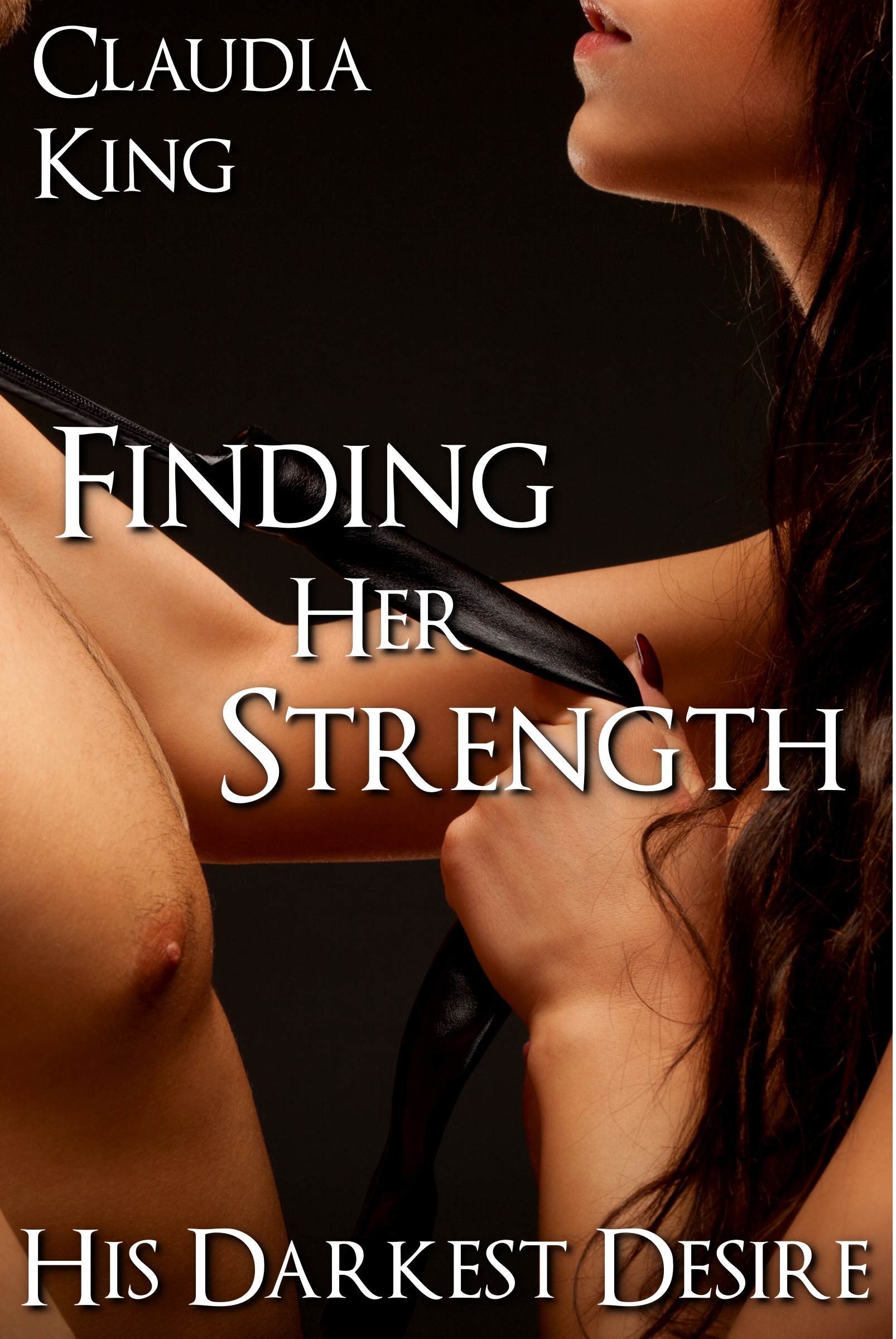
Finding Her Strength Published!

Part eight of His Darkest Desire is done and available for purchase on Amazon and Smashwords! Things are getting serious for our couple in this penultimate part of the story!

Nina and Elliot are finally free to be together — but one last secret from the millionaire's past is still waiting to be uncovered. Marcia is still determined to come between the couple, and when no answers from her Master are forthcoming, Nina is forced to take matters into her own hands.
The truth about Elliot's relationship with his old flame is about to come to light, and Nina soon finds herself facing a terrible decision about the future. She cannot afford to be a passive slave to her Master any longer.


It's hard to believe my first full series is almost done! All told, it's probably going to finish up at around 60,000 words. According to the internet, that qualifies it as a short novel! I'm definitely going to be publishing the entire thing as one full book at some point in the future. Speaking of word counts, this latest chapter is yet another long one, sitting at 7500 words. That's part of the reason why my recent stories have been taking a little longer to publish than usual — they're running on beyond the initial 5000 word length I had in mind when I started publishing. I feel like that's a good thing though. More story (and sex) for everyone to read is always nice, even if it means taking longer to write and edit. I'm still going to try my hardest to hit one release a week, but if recent trends are anything to go by it might start looking more like one release every week and a half.

Next up on the schedule: Part 3 of Wild Instincts.

Oh, oh! And Happy Valentines!

Saturday, 9 February 2013

Alternate Endings

I've been neglecting the blog this week! A new Darkest Desire chapter should be out within the next few days, but until then I'm going to spend some time talking about alternate endings.

In my experience, 90% of the time alternate endings are weird. I do not like them in traditional storytelling, and I feel like the majority of stories that incorporate more than one ending do so inappropriately. Alternate endings do have their place, but they require a very specific type of story in order to pull it off. I'll be mentioning video games again here, because recently the gaming medium has been the only one to tackle alternate endings in a widespread manner (to varying degrees of success).

I'm going to be bold and outright say that no traditional story should ever be given an alternate ending. Yeah, you can argue that they're an interesting side feature to see on a blu-ray, much like deleted scenes — but that's all they are. An interesting extra. When you have movies like 28 Days Later that screened with the alternate ending being played after the first one, it creates a jarring lack of closure for the audience. The fact that the directors preferred this alternate ending to the one in the final cut (and only changed it because it tested badly with audiences) further muddies the water. I have no problem with people changing the endings to their stories pre-release for whatever reason, but I feel as though offering two very different conclusions side by side undermines the integrity of a story, and damages the product as a whole. It becomes hard to discuss a story critically when you have to view the entire thing in the context of not one, but two (or more) separate conclusions. Ultimately, it's confusing.

Now that isn't to say that viewing the same material through different filters can't be very interesting and provocative — but it all depends on the type of story you're trying to tell. As I mentioned, traditional storytelling relies on a single, conclusive, wrap-everything-up-and-give-us-closure type of ending. So what's an example of a good alternate ending? The recent Deus Ex game, Human Revolution offers the player a choice of no less than four different endings. Surely that's even more awful and convoluted, right?
Well, no. Because from the start, Human Revolution is set up as a commentary on the theoretical (for now) issue of transhumanism becoming a central part of society. Throughout the game the player is presented with a series of moral viewpoints that explore different sides of the issue, and the entire storyline is deliberately ambiguous on which one of these viewpoints might be considered the "right" one. As a result, any conclusion that favoured one perspective over the others would undermine the entire debate the game intended to provoke. It feeds the player information about the issue throughout the entire storyline, and at the end presents us with the question: "What do you think? What conclusions have you reached after all of this?"
As a result, each ending provides a different monologue that concludes the protagonist's story with him reaching a decision (or not, as one option allows) about his stance on transhumanism. Without alternate endings, the story could never have provided as satisfying a conclusion on the subject without becoming biased in a viewpoint that the player might not agree with.

Unfortunately though, Human Revolution is the exception, not the rule. A lot of games handle alternate endings awfully (at least from a story perspective), often concluding in a "bad ending" if the player hasn't jumped through the requisite hoops to see the "good" or "true" ending along the way. On a game design level this ties into things like replayability, but story-wise it often ruins the conclusion to a narrative by purposefully giving the player an unsatisfying ending to their experience. It's even worse when story elements are deliberately left unresolved in these "bad" endings. That's straight up crippling your storytelling on purpose.

So, while I do think alternate endings have their place in a certain kind of narrative (namely, an ambiguous one), they really add nothing to a traditional narrative. In fact, I'd argue that they damage it by feeding the audience conflicting information.

And let's not even get into going back to change your ending post-release because people didn't like it.


Sunday, 3 February 2013

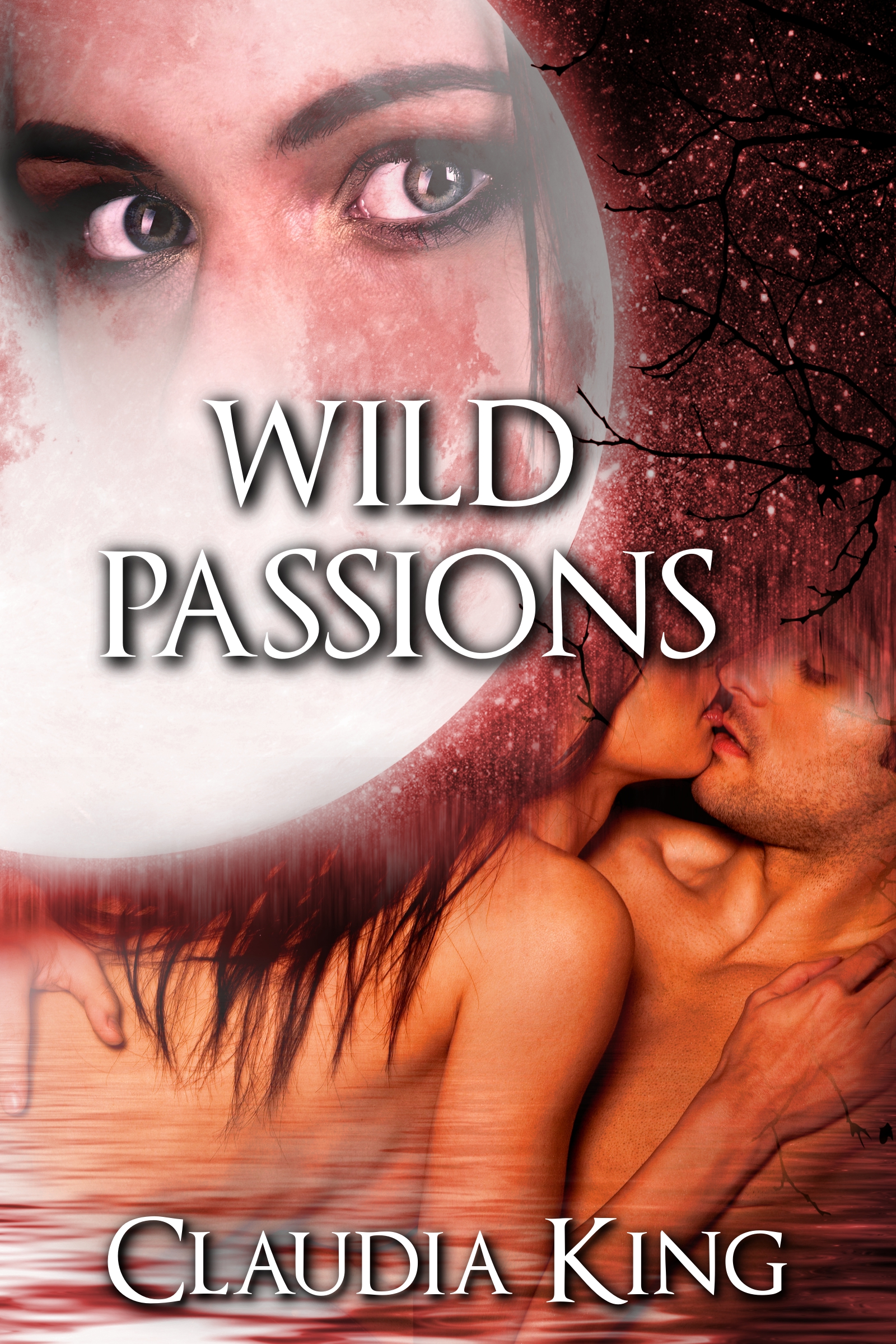
Wild Passions Published, and Polishing Prose

The second part of Wild Instincts is finished and available to buy on Amazon and Smashwords! In line with my recently lengthy shorts, this one's setting a new record at 8000 words. You can pick up the first part for just $0.99 now, and hopefully for free in a few weeks time!

Lyssa and Hawthorne are growing closer, but with their dangerous animal instincts boiling beneath the surface, can the pair ever become more than just friends? After enduring a cruel punishment by her alpha, Lyssa is forced to confront her instinct, or give in to it completely.
But Thorne's desires are simmering too. His wolf's needs are becoming harder to fight. Once the beast inside him is awake, it will stop at nothing to have Lyssa—no matter how savagely he has to claim her.

Aside from the new release, I've been thinking about Prose recently, and how I've been getting better at the technical aspects of writing over the past few months. Despite having a degree in Creative Arts, I've gotten literally zero training in the technical side of writing since highschool. And even then, I recall us spending roughly two months on creative writing out of the entire syllabus. So everything that I know (which isn't a lot) about grammar, sentence structure, dialogue etc. has been either self-taught, or more often just what I can pick up on from looking at how it's done in other novels. It's always been an uncomfortable area for me, because without any formal training I've always had a lot of niggling doubts about whether I've been doing this stuff right (I haven't).

Just the other day I finally took it upon myself to look up once and for all what the difference between ending a piece of dialogue with a comma, and with a period is. I'd always just assumed it was to do with pacing, and the "sound" you want a piece of dialogue to evoke when you read it, but upon further investigation I now know that the use of a comma is reliant on the sentence being followed by a dialogue tag (he said, I asked, Janet whispered), whereas a period tends to come when the following text describes an action. More or less: "he said" describes the preceding dialogue (and is therefore part of the same sentence), whereas "He stood up"while it might coincide with the dialoguehas nothing to do with the character's verbalisation of those words, and therefore gets its own separate sentence.

This is probably basic stuff to anyone that's been educated in the technical side of writing, but it was something new to me! Knowing exactly when and where to put a comma instead of a period when I end dialogue is another step towards becoming comfortable with my prose, which means I can stop worrying about it as much and focus on what really matters; telling the story.

Of course, I'm now painfully aware that all of my older work is riddled with inappropriate commas and periods in dialogue.
But, I suppose, if I didn't notice it as a writer, I'm crossing my fingers that most of my readers can handle it until I get around to the big re-edit of my back catalogue!