Tuesday, 15 October 2013

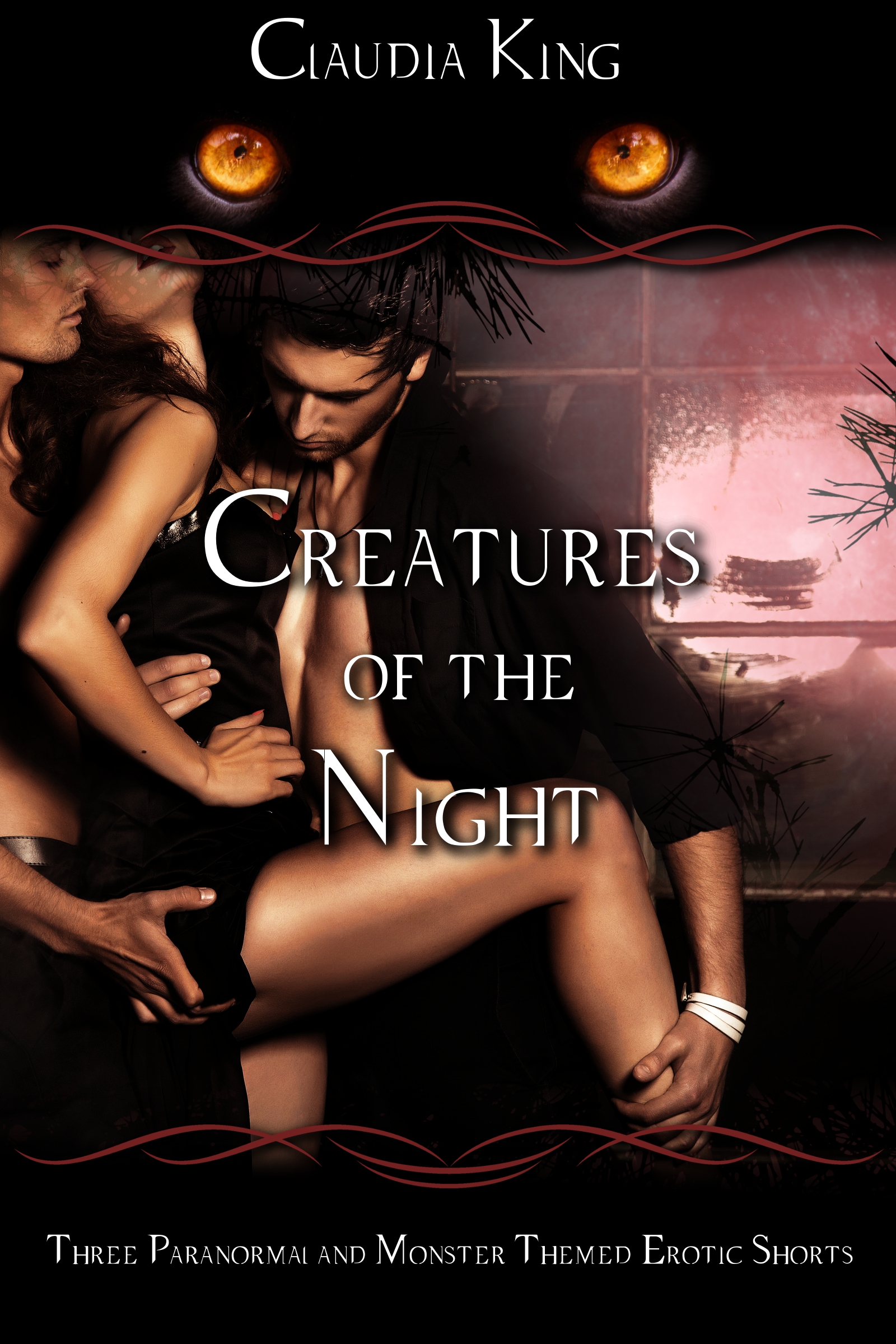
Creatures of the Night Bundle Released!

Spooooky!
Since Halloween's coming up I figured now was a perfect time to re-edit and repackage three of my old erotic shorts into a nifty bundle involving all sorts of beastly and paranormal sexytimes!
Creatures of the Night is available now for purchase on Amazon and Smashwords!

* * *

Mysterious, frightening, and furiously passionate -- the creatures that lurk in the night embody our darkest and most erotic of fantasies.
From beautiful vampires to lustful beasts, Claudia King presents three erotic shorts themed around the monstrous and the paranormal.
Not for the faint of heart!

Contains:

Taste Me, Take Me (MMF, Vampire)
Mated by the Minotaur (M/F, Monster)
Ravaged in the Stables (M/F, Paranormal)

Taste Me, Take Me:

Two beautiful strangers have been watching Rachel from the crowd whenever her band performs. Tempted by the pair, when Lane and Stefan finally introduce themselves she finds herself accompanying them back to their apartment that very night, only to discover that her handsome admirers are not just hungry for her body, but her blood as well.

Mated by the Minotaur:

Princess Cilissa's cruel father has had enough of his wayward daughter's disobedience. Sentencing her to be thrown into the Minotaur's labyrinth, Cilissa has no choice but to accept her punishment.
The maze is dark and endless, and her only hope is to find a way out.
Somewhere in the darkness the beast stalks her, ravenous to claim the beautiful young princess and make her body his.

Ravaged in the Stables:

A wild girl living by her own wits, Kay is both fascinated and intimidated by the exotic wolf men living in the woods nearby. When one of the beasts comes to her aid, however, she soon finds herself alone with him in the stables, and Kylar the Wolf is intent on making Kay his mate in a night of furious passion.

* * *

So! That means there's only one more bundle (containing three more shorts) to go and I'll be all caught up on redoing my back catalogue, at which point I can get on with the full novelisation of Wild Instincts and begin my other new projects in earnest.

Also as another update, it seems as though some ebook retailers, Amazon included, are cracking down once more on certain erotic titles (predominantly from self-published authors) that feature various "taboo" themes. Fortunately this has only hit two of my titles, my M/M bundle and one of the stories it contains, but I've managed to tweak the title and description of His Girlfriend's Daddy to make the implied-pseudo-incest-but-not-really less obvious. The bundle is back up, but I'll have to redo the cover of His Girlfriend's Fantasy (to use the new title) in order to get it back on Amazon's shelves as a standalone.

I considered writing another blog post detailing my thoughts on this latest absurd wave of censorship (and the horribly inconsistent and frustrating way Amazon is handling it), but really I wouldn't be saying much that I hadn't already outlined in my post on The UK Porn Block. I feel very strongly on issues of media censorship, and the stifling of sexual outlets and fantasies is never something that I've considered to be healthy for society as a whole.
The good folks over on kboards are involved in a lengthy discussion on the subject that you can check out for more details and accounts from various authors who are having their whole livelihoods messed up by this Victorian attitude to porn and sex-based media.

I should have some more regular releases appearing in my schedule now that my last novel is out of the way, so keep your eyes peeled for more updates coming soon!

Tuesday, 8 October 2013

"Good Writing"


Today's topic might be a bit of an argument of semantics, but the term "good writing" has always been a bothersome one for me. In its strictest sense this generally refers to the words on the page; the clarity, pace, voice, and structure of the sentences an author strings together. The issue, for me, comes in the distinction between good writing and a good writer, along with the way many people use the phrase "good writing" to describe a book they enjoyed in the most general sense.

Funnily enough, you don't have to have very good writing to be a good writer. Your prose can be as basic and utilitarian as it comes, but if it's used to create a compelling story with engaging characters and a gripping plot, readers are still going to be glued to the pages from start to finish.
I recall Stephen King mentioning in his book On Writing that he doesn't consider himself a good "writer", merely a good storyteller.
I'd very much say the same of myself.
I don't try to be poetic or sublime in my writing (I've been trying my best over the past year to simplify my prose as much as possible, if anything), I just try to convey the point as clearly as possible to facilitate the scene at hand. When I sit down at my keyboard I'm not generally thinking about what I'm doing in terms of individual sentences, but the scene they construct as a whole, and the place that scene has in the greater narrative.

On the other end of the spectrum you have writers who are incredibly eloquent and poetic, but who don't do a very good job of putting together a story that holds the reader's interest. A while back I tried to read Mervyn Peake's Gormenghast, and I took two things away from my experience; firstly, that Peake's prose was amongst the most eloquent and poetic I'd ever read, and secondly, that his work was massively inaccessible to a modern audience.
I don't like to say that authors from his generation are "bad writers", because the standards of storytelling from fifty years ago were very different to what we understand today, but Gormenghast, for all of its delicious turns of phrase, is not a story that will suck many people in.
It is not, by our standards, a well-told story.
A piece of art? Certainly. But not a well-told story.

So where am I going with all of this?
Well, the other day I read a comment on a forum from someone who had taken a brief glance at a fellow author's novel, and returned within a few minutes to reassure them that they were a "good writer".
I had to pause and scratch my head at that. Of course, I'm sure they author in question was a wonderful writer, but it made me think about how a lot of people are liable to read short passages of prose, assess how "well written" it is, and then go on to classify the author as either a good or bad writer based purely on the way they construct a paragraph.

I'm guilty of this too! I often find myself dipping into successful novels on Amazon, casting my eyes over the excerpt, and reassuring myself that "I could've written this. Being a good writer isn't so hard!"
Of course that's silly, because the success of a book has very little to do with the "writing" in its most literal sense. J. K. Rowling isn't successful because she can turn a phrase like Shakespeare, but because she can construct scenes and storylines that lend themselves perfectly to a thoroughly gripping page-turner.
It's not so much about the words we use, but the world we build out of them, and that's something that can never be assessed at a quick glance.

The phrase "good writing" is mentioned so often in book reviews that it's often hard to discern exactly what someone means when they use it. Was the book really made great by the author's mastery of prose? Or was it more to do with the scenes and characters they created, the plot and pacing, or any one of a dozen other things?

Don't get me wrong, good writing is still an important part of any novel, but in my eyes it's relatively low on the scale of things that make most readers fall in love with a book. And yet, because it's the most immediately and visually apparent quality of a novel, many readers (myself included) tend to attribute a lot of their superficial impressions to "good writing", when really they should be talking about something else.

Now I feel like a massive nerd for fixating for so long on how people use a single phrase.

Friday, 4 October 2013

Wild Fates Released!

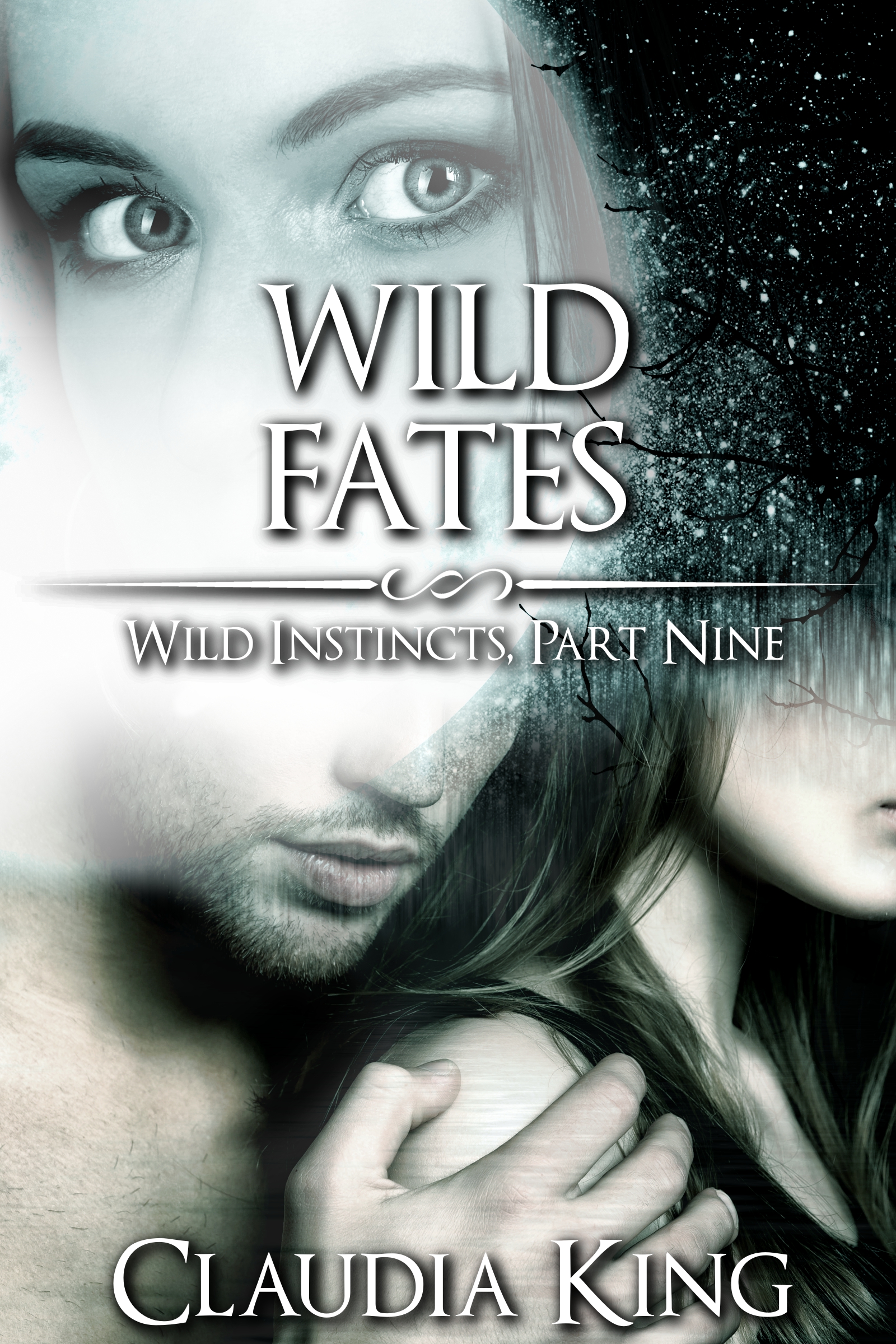
Here it is at last, and hopefully well worth the wait! Around twice the usual length of most of my chapters, the dramatic conclusion to Wild Instincts is finally done and available to purchase on Amazon and Smashwords!

The Wood Pack and the Mine Pack have finally come head to head, and as both werewolf clans struggle for dominance Lyssa is caught in the middle, pursued by her old alpha and racing to save those she cares about most from the devastation of the conflict.
Cyan's presence brings back dark memories of her instinct and the past she shared with him, and only one other wolf can save her, both mentally and physically, from his relentless obsession.


So that's it! My second novel is done! In the coming months I'll be doing another big editing pass as I attach all the chapters together for publication as a standalone title, but it'll be a while before that's done.

It's a nice reflective moment to look back on everything I've done this year, and Wild Instincts has very much been my big writing project of 2013. I'll be starting work on new novels before the end of the year, but unless I can somehow squeeze them out within three months alongside all my other projects they're not likely to top my werewolf eRom's place as my largest time investment.

I feel like I learned a lot more about myself as a writer (just as I did with my first novel) working through Wild Instincts. It started out as a pretty standard eRom initially, with short(er) chapters crammed with sizzling sex, but as early as part three I realised that the erotic element wasn't necessarily going to drive this story in the same way it did in His Darkest Desire.

Looking at it overall, Wild Instincts is really more of a steamy romance that verges into New Adult territory than it is an eRom. Had I known exactly how it was going to turn out from the start I'd likely have rebranded it a little and altered the sex scenes to match. It was first and foremost a story I wanted to tell, rather than an erotic fantasy I wanted to explore.

Having said that, I tried my very best to make every sex scene sizzle all the same, and there are plenty of them to enjoy within the novel's ~96,000 word length! Given that the story wasn't explicitly about sex and kink, however, I often found myself spending a long time thinking up reasons for each sex scene, and wracking my brains for ways to vary them up without every chapter having a routine "...and then Thorne and Lyssa had sex, because they felt like it" moment.

It was a tough project to get through at times!
I'm still proud of the end result, but it's taught me a lot about planning out the tone and erotic content of my future projects. If I write another Wild Instincts (which I just might be!) it'll likely be branded as a steamy romance from the start rather than erotica, and when I get to work on my next eRom title I'll make sure to tie the sex into the ongoing story much more firmly.

Sorry for the slowness of blog posts again, but it's been all hands on deck to finish up this last chapter! Once the final kinks with Amazon are sorted out I should be back on a much more regular schedule, starting with releasing a spooky paranormal erotica bundle just in time for Halloween!

Thursday, 26 September 2013

Sizzling Little Details

I'm late on the blog posting!
It's been a busy week trying to wrap up the final chapter of Wild Instincts after my delays, but fingers crossed I can get it released by the weekend. In the meantime, though, I thought I'd whip up a quick post about one of the elements that can really sell a sex scene for me; the sizzling little details.

For me, I've always treated sex scenes as akin to action scenes in literature. Yes, hurr-hurr, they are quite literally about a lot of action happening, but similar to a fight or a chase or a struggle against danger of some sort, sex scenes are all about moving characters from point A to point B via the medium of an exciting, adrenaline-fuelled sequence that is designed to entertain through both the visceral and the emotional aspects of it. The emotional side (or the touchy-feely/plot related/character-driven stuff) follows pretty much the same rules as any scene in a good story, so that's a whole different topic (and probably one I've mentioned before), but when it comes down to the visceral element, a sex scene really needs something special in order to sizzle.

This is where things like word choice, pacing, sentence structure, and tone all come into play to create an experience that is just devilishly sexy from start to finish, and for me a big part of what makes a sex scene memorable is the small things the author mentions.

Sex, just like action, has the potential to get very dull very fast if it isn't done well. Even if you're emotionally invested in the characters, reading about Tab A being inserted into Slot B for the dozenth time can get pretty old if it isn't spiced up with something new. This can be varied (particularly in more exotic erotica) by introducing new positions, new acts, and even new partners, but even vanilla sex can be made thrilling all over again by the inclusion of a dozen sexy little details.

I love the minor moments that make a sex scene feel real. Things that not every author always mentions; things like the texture of a partner's clothing, the contrast between the fabric of a choker and the smoothness of warm skin, the tension of sharp nails scratching across flesh and the delicious shiver it elicits. I like the tightness of a partner's grip, the brush of stubble, the friction between two perspiring bodies, or the hot bite of the whip as it cracks against the heroine's back.

In general storytelling I'm usually against heavily intricate description like this, but it plays a core role in arousing your readers, and in the context of a sex scene it's a massive part of what makes the material engaging.

Interestingly enough, I also have a liking for sex scenes that do the exact opposite of this -- eschewing detail for the sake of painting a more long-term picture of the act. That's a topic for a whole other time, though.
In general terms, sex scenes are an intimate, action-packed, visceral experience on top of the emotional aspect that should be present in any dramatic scene (assuming you're not just going for one-off sexy shorts -- in that case the visceral element is much more important!).

Honing in on the sizzling little details and really making them your own is a fantastic way to make a sex scene stand out from the crowd, and it's what separates many of my favourite erotic scenes from those that are largely forgettable.

Monday, 16 September 2013

Sympathetic Characters

Sympathetic characters have been on my mind a lot lately, in no small part due to super-secret upcoming novel plans involving them, so I figured it might be fun to write a blog post talking a little bit about what these characters are and why they exist!

A sympathetic character is, as the name implies, one towards whom we feel sympathy, and this is often a defining characteristic when it comes to adding depth and relatability to characters we wouldn't otherwise be so keen to get on board with. Of course, protagonists and heroes are generally always sympathetic, but that comes with the territory, and they wouldn't make very good heroes if we didn't empathise with them in this way. But when it comes to other supporting characters -- or sometimes even antagonists and villains -- a little bit of sympathy can go a long way.

To put it as concisely as I can, any character you tend to look at and think "Oh, so that's why they're like that", is probably a good example of sympathy being used to add depth in a way that makes us feel a few feelings. Gollum from Lord of the Rings is an excellent case in point when it comes to sympathetic characters. He's not a particularly nice creature, granted, but he isn't a thoroughly evil and malevolent one either. We come to understand that he is the way he is because the ring has poisoned him and made him reliant on it, much like a junkie doing whatever he can to find his next fix. We're sympathetic to the wretchedness of him, and the small part of Gollum that still wants to do the right thing buried deep beneath the surface.

This is generally what the sympathetic character is intended to accomplish a lot of the time; making us empathise with and relate to an otherwise unlikeable or immoral individual. It's especially useful when telling a story focusing on a more villainous character as the protagonist. We're much more willing to get on board with a bad guy as the hero if we understand the reasons behind why they're a bad guy.

Of course, as usual, I'm largely talking about conventional storytelling here. You can still very much write a thoroughly nasty and irredeemable jerkbag as your hero and make a good book out of it, but a character like that isn't going to tick all of the right protagonist boxes in the traditional sense.

So how do you make a character sympathetic? Well in the shower this morning I came up with a couple of pretty standard tropes you tend to see used a lot for accomplishing it. The most oft-used is the weepy backstory reveal. If you create a character who acts like a jerk because of bad things that happened to them in the past, then people will generally feel sorry for them rather than being instantly judgemental. Gollum, Severus Snape, and even General Woundwort, who I talked about last week, are all prime examples of this. We have a tendency to excuse others of their shortcomings (to greater or lesser degrees) if they've had a rough time of things themselves.

The second, and rather more interesting, in my mind, method of creating sympathy towards a character is to make them the lesser of two evils. This kind of characterisation suits antiheroes particularly well. In the original Star Wars, Han Solo is hardly a paragon of innocence and virtue like Luke Skywalker, yet he is a far cry from the villainy of Darth Vader. In a world of corrupt cops, the officer who only accepts bribes sometimes becomes the good guy, because he elevates himself above those around him by comparison. I like this kind of characterisation because it doesn't make excuses for a character's behaviour. It allows writers to explore otherwise unpleasant or unlikeable individuals in a context where the reader is forced to latch on to them in the absence of anyone more suitable.

Those are just some of my thoughts on sympathetic characters and how we create them for today. I've been pretty slow on the writing front this week due to a yucky bout of illness and other ailments (I'm getting over it now!), but Wild Instincts #9 is still coming along. More releases and blog posts to come now that I'm clawing my way back into the saddle!

Tuesday, 10 September 2013

Review: Watership Down

Ah, a real classic!
Watership Down was one of those movies that traumatised me (and many others) as a child with it's gruesomely graphic depictions of bunny-violence, and a downright disturbing and genuinely horrific tone overall.
Don't get me wrong, it was still a great and memorable story, but sheesh. Please don't show the film version to your young kids, guys.

I didn't actually get around to reading the original book until I was at university, but boy am I glad I did! Rather than being a harrowing tale of violence between fuzzy animals, the book is far lighter and easier to digest than the movie adaptation. It was the one novel that really sold me on Richard Adams as an author, and later led on to me reading my all-time favourite Maia.

This is genuinely a book for all ages. It has a wonderfully compelling moment-to-moment narrative, with our cast of bunnies embarking on their journey to find a new home after their original warren is destroyed, combined with a thoroughly charming and fleshed out world of fantasy seen through the eyes of an animal, and topped off with a pleasant scoop of intellectual subtext to boot!

Perhaps my favourite part of Watership Down is the richness of character the book has. It would have been very easy to make the bunnies in this story relatively simple anthropomorphic creatures who behave in more or less the same was as humans, but Richard Adams really pulls out the stops by creating an entire bunny culture and mythos to support his cast of characters. They have their own belief systems, language, rituals, and limitations (one particularly cute detail I enjoyed was learning that Adams' rabbits are unable to count higher than four). Just like in any well-executed tale of fantasy these details are woven into the narrative as and when they are appropriate, rather than bogging down the story in heavy exposition to get you up to speed with how everything works in bunny-land. It's a wonderful collection of detail and characterisation that lends the book a distinct sense of individuality and identity, making Watership Down a place you can genuinely lose yourself in despite its everyday setting in the real world.

Alongside the supporting details the book boasts a wonderful cast of characters that, while simple, fill exactly the variety of roles that I adore in a story like this. Amongst others you have the leader, the warrior, the thinker, the intuitive one, the stubborn one, the fallen hero, and, of course, the antagonist.

The Big Bad in this novel, General Woundwort, is one of my favourite villains in literature (in fact, I even wrote a university paper all about him!). Like the other bunnies he is characterised incredibly simply, but incredibly effectively. He's big and scary and dangerous, but he also has depth and a degree of sympathy to be felt towards him. Rather than just being the boogeyman of a fun childrens adventure, he feels like a real person (bunny, whatever) with motivations and reasoning behind his actions. Without spoiling too much, even his status as a villain is left slightly ambiguous up until the last moment. If you've read my Werewolf series Wild Instincts, a lot of what happens in that story is inspired by Watership Down, and one character in particular has more than a touch of General Woundwort in him!

Besides the story and characters, there's also a nice amount of literary subtext to be found in the novel (an unintentional amount, according to the author, but one can't help but feel that an intelligent writer like Adams tends to incorporate these ideas naturally). The idea of the hero's journey features prominently, along with an exploration of various social structures (anarchism, democracy, and dictatorship) seen in the different rabbit warrens the characters come into contact with over the course of the story. There are also connotations to Homer's Odyssey, and this thread of epic storytelling is a common one to be found amongst many of Richard Adams' works. Thankfully, again, none of these themes are handled too heavily, providing a pleasant accompaniment to the story rather than ever becoming the central focus of it.

Watership Down is a great example of everything I love in an easy, but memorable read. It's simple, elegant, effective, and just deep enough to suck you in without ever becoming too heavy. When a book can be just as compelling for young children and literary scholars alike, I think it's genuinely something special.
I will say that Watership Down never really made me feel those highs of emotion that some other books have, but that's hardly a detriment to the story considering its subject matter and audience.

It's a stellar read, and one of those books that I think everyone should have a copy of somewhere on their shelf.

I'd give Watership Down a bunny-licious Required-Reading Out Of Ten!

Monday, 2 September 2013

The Art of the Dress

One particular element of characterisation that's always been of interest to me is the way in which we design what out characters wear. This is generally something that has much more of a direct impact in visual mediums, but it's an important part of literary storytelling as well.

What a person wears can tell us a lot about them. Along with their physical appearance it's often one of the most important factors in forming a first impression of someone. A talented storyteller will be acutely aware of this, and tailor a character's wardrobe around a specific emotional response that they want to elicit from their audience. This is something that can vary from scene to scene, chapter to chapter, but often a well-constructed character will have a "signature" outfit or look that we identify them with. Bruce Wayne wears a suit. Rocky Balboa has a pair of boxing gloves and shorts. Count Dracula wears a high-collared cape.
A signature outfit can reinforce a character's profession, social status, attitudes, and the setting they find themselves in. Just like how we all have our own personal styles of clothing that reflect certain things about us, the same is true of our characters. The way one of your fictional creations dresses should never be chosen carelessly, as it's one of the most powerful characterisation tools we have to make a first impression with.

For me, clothing is something I rarely describe in great detail in my writing. I've always been a fan of allowing the reader some leeway to paint their own picture in their head (I think this is especially important in erotica, where the physical fantasy of the main characters needs to be as ideal and personal for each reader as possible), but nevertheless, I'm always careful to drop in a few telling hints to guide the audience's perception of my characters.

One of my favourite little clothing tidbits comes from my soon-to-conclude serial Wild Instincts. Most of the characters in this steamy werewolf romp dress similarly; jeans and jackets and boots, the sort of rough and practical clothing that suits a life lived in the wild. The antagonist Cyan, however, is described as wearing a hunting jacket. This is an incredibly minor detail, but I absolutely adore how much it's able to convey about his character through the addition of that single word. He is a hunter, a predator, an alpha male. It gives him a savage and determined edge, and a ruggedness that many of the other characters lack by comparison.

Another intentional clothing choice of mine pops up in His Darkest Desire. While the protagonist Nina is not exactly a secretary in the conventional sense, nor is her love interest Elliot a traditional businessman, I very much wanted to sell the fantasy of the powerful boss dominating his personal assistant. As a result, Nina's choice of fashion often involves crisp blouses and skirts, while Elliot dresses in smart and businesslike attire. Even in several of their bedroom scenes Elliot is described as wearing his classy white shirt, rolling up the sleeves and undoing his top buttons to maintain his air of dominance while allowing a hint of something more wild and passionate to creep in.

Clothing is also something that can be varied from scene to scene to challenge our perceptions of a character. A great example would be the "sexy lady" reveal of a female character often seen in movies, where a previously plain or strictly professional character is seen letting down her hair, putting on a slinky dress, touching up her makeup, and finally descending down a flight of stairs accompanied by some alluring jazz. It's harder to have this same effect in literature, but taking the time to describe how a character's appearance might have changed from one scene to the next is always a handy technique to use when you want your audience to think about someone in a different way.
Perhaps the businessman's suit has a small tear in the shoulder we've never noticed before. Perhaps the golden watch we're so used to seeing around his wrist is missing. He has a coffee stain on the hem of his shirt that's just slightly too big to tuck out of sight beneath his belt, and his tie looks as though it was knotted carelessly and in a hurry.

Of course, none of this is strictly necessary, particular in literature, but it's an important gizmo in your toolbox to be aware of. If you describe a character's clothing, your audience is going to respond to it. Make sure that the response you get is the one you want, and try never to dress your characters haphazardly because you didn't take the time to consider how it might reflect on them.
Signature outfits, wardrobe changes, and first impressions are all powerful tools an author can use to influence subtle characterisation.