Wednesday, 19 February 2014

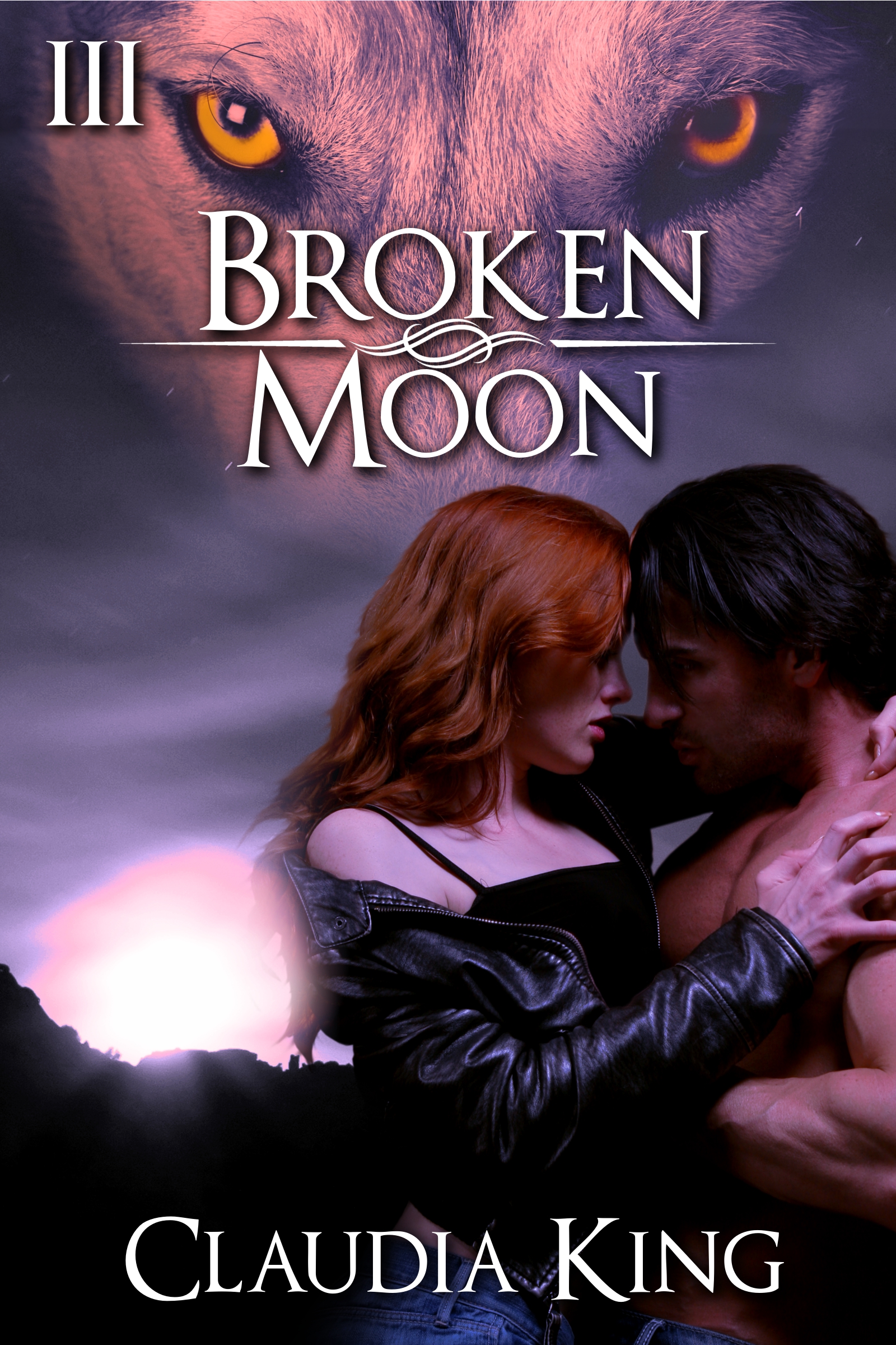
Broken Moon Part 4 Published!

I was hoping to push this one out a little earlier than usual, but all of a sudden it ended up being 5000 odd words longer than I'd planned! So here we go; part 4 is here, and we're getting into the meat of the romance and plot developments as we press onwards into the middle of the story. Available to purchase on Amazon and Smashwords, as per usual!

As her relationship with Cyan grows more intense and the looming prospect of her mating edges ever closer, April is finally forced to start confronting her feelings about what she truly wants -- and the price she may have to pay for breaking her pack's age-old code of honour. Tempers and dissent flare amongst the Highland Pack as the leadership of the secluded group of werewolves is called into question once again, with Cyan finally taking a stand for what he believes is right in spite of his promise not to get involved. With a new arrival in camp who threatens the secrecy of their hidden lives, April must choose where she stands; with her friends and family, or with the dark outsider who is fast capturing her heart.

Hopefully part 5 should be out in a slightly more timely fashion, as I've been working to optimise my writing time and plan things out more thoroughly in advance. Assuming it doesn't run on as much as this one, the next part should be finished before too long!
Also more blog articles. I need to stop forgetting to do them.

Friday, 7 February 2014

Character Change

Every good character should have an arc.
Okay, no, that's totally not true, but just like any of the "rules" of writing it's a pretty effective staple of storytelling. If you want to make a character compelling and their story satisfying, you should generally give them an arc.

An arc is simply the transition of a character from point A to point C, with the events of the story shaping their transition from one to the other. Harry Potter starts out as a lonely, abused child living in the cupboard under the stairs, and ends up as a great wizard who saves lives and defeats evil. Luke Skywalker is a farm boy who becomes a Jedi. Dorian Grey is a beautiful, indolent hedonist who turns into a monster that cannot stand the sight of himself.
Arcs can affect physical change in the world and relate to a character's social status or personal deeds (like those of Harry and Luke) or focus purely around the psychological and emotional development of a character (Dorian). They can be either positive or negative changes, but the change must be meaningful and related clearly to the events of the story in a way that readers can understand. A character's arc is essentially a microcosm of a story in and of itself. Seeing someone change and react and develop in response to the events around them is in itself its own little personal story, independent of the larger plot.

However, it's important to keep in mind that "change" is not synonymous with "arc". Countless times I've heard readers, viewers, and players defend even the most absurd character transitions on the grounds that it's "better than no change at all", and I feel as though it's an assumption worth commenting on.
Character change is a lot like the concept of originality. We tend to hold it up as a prized quality in storytelling; something that every creator should strive for to enrich their work, and something that less experienced students of the art often trip up on in their efforts to recreate. Of course, this is silly. Originality has no intrinsic value in storytelling, because everyone can be wacky and weird and bizarre if they want to. In fact, the reason most stories come across as formulaic is because they're sticking to the same tried and tested set of rules that generally make for an entertaining story in the first place. Why would you try to be original when you're just going to be breaking something that already works perfectly fine?
It's hard to break what works and make it still work after you're done toying around with all the parts, and that's where genuinely praiseworthy originality comes from. It requires skilful handling to be good original rather than just weird original, and the same is true of making character change into a satisfying arc rather than just change for the sake of change.

The worst instances of this can often be found in long-running TV dramas, when writers feel the need to switch up the character dynamics a few seasons down the line by changing who's a bad guy and who's a good guy (etc.) to keep things fresh. This usually runs into a whole bunch of pitfalls when the writers don't adequately explain or demonstrate the transition, making characters "change" purely for the sake of having something different happen.
I vividly recall the absurdity of the third season of the show Heroes, where the good guy/bad guy dynamics started to switch up on an almost episodic basis, with half the cast coming off as schizophrenic at best and almost comical at worst. This is more of an issue with how these dramas are commissioned and written in general (if you give a character a complete arc in season one, what do you do with them in season two? If you leave their arc unresolved at the end of a season, what if the network cancels your show before you can finish it?) but it's a good reference point for some of the pitfalls of long-term character development.
Similar to how TV shows feature characters with complete arcs, followed by radical personality shifts (or backpeddling) to facilitate new arcs in season two, novel sequels run the same risk of forcing the writer to change their characters for the sake of making them interesting again if the original book was initially intended to be self-contained.

This is one of the reasons why my current WIP Broken Moon is a loose sequel featuring new characters rather than a direct continuation of the preceding book, and any plans I have for subsequent sequels will likely continue in the same mold. I like to give characters complete, satisfying arcs in my stories, and I don't want to have to change up their personalities or invalidate any of their development for the sake of a sequel.
Of course, it's perfectly possible to continue arcs on after they apparently "conclude" (Luke Skywalker became the hero, but he's not a Jedi yet, and Harry became a wizard, but he hasn't defeated Voldemort once and for all), but it does require some forethought.

Phew, so those are my thoughts on character change for the day! Change is not synonymous with Arc, and it has no inherent value in and of itself. Character change should never be haphazard, and if you're going to be writing sequels, make sure you think about how to carry on that arc beyond the initial point of resolution without cooking up something contrived that's only going to alienate your audience.

Tuesday, 28 January 2014

Recapping - How to keep repetition from becoming repetitive.

One topic that's been on my mind recently as I progress on with Broken Moon is how to approach the subject of recapping. Since this is technically the second book in a series it draws pretty heavily on the events of the previous novel to inform the actions of one of the main characters, but at the same time I don't intend for the story to be a direct sequel. If I want Broken Moon to work as a standalone a certain amount of recapping is going to be necessary, but how does an author approach that without either boring readers of the previous book, or confusing newcomers to the series by not giving them enough information?

I had a few ideas in mind when I started this, but I think the most critical part of an extensive recap is this: It needs to come from a different perspective.
A series of events retold in exactly the same tone and voice as they were originally is going to become repetitive, but if the author can put a new slant on those events then they can be made fresh and interesting again even to readers who have heard it all before. This also works the other way around, giving readers of the new book a differing experience when they go back to read the old one, rather than feeling like they've already been spoiled on everything.
As a side note, I also like to keep spoilers as minimal as possible. Of course, you have to get into pretty dramatic spoiler territory when recapping critical events, but I like to keep the details vague enough that the reader only gets a general outline rather than every bit of the nitty-gritty.

So! The easiest way to do this is to recap from the perspective of a different character. Wild Instincts was told explicitly from the perspective of the protagonist Lyssa, whereas Broken Moon frequently gets inside the head of Cyan, the previous book's antagonist. While there were mild hints at Cyan's motivation scattered throughout the first novel, he was by and large a clear bad guy with very few redeeming qualities. When Broken Moon gets to the stage where Cyan retells his version of events, my plan is to go into specific detail about how and why he made those choices, and while his actions won't exactly be redeemed by this new information, they will (hopefully) at the very least seem much more understandable and sympathetic.

On top of this I'm also making sure not to reveal too much information too early on. This serves a dual purpose in the story for both new readers and people who are familiar with the previous book.
Despite being frequently pestered by the heroine April to talk about his past, Cyan is understandably reluctant. For new readers this creates an air of dark mystery around his character, and a dangling question waiting to be answered, with a whole lot of anticipation and tension behind it based on the small hints he drops about how sinister his backstory is.
For people who have read Wild Instincts, however, they know all too well what Cyan's done and what he's capable of. They realise that April's perception of him as a good and kind person may not be entirely accurate, and that the tensions between him and the other characters might well boil over into something much darker. It dangles another question in the air for this group of readers; rather than "What happened in Cyan's past?" they instead have to consider "What will happen when April finds out the truth about him?"

So that, to me, is how you should go about recapping past events in a novel. There's always a very pressing urge to just rattle off necessary information as an author; to fill the reader in as thoroughly and directly as possible so that they're all caught up and ready to enjoy the fun part coming up next.
The trick, of course, is making that catch-up period fun as well rather than it just being an expository information dump, for both old and new readers alike.

I'm sure there are other techniques that can be used to put a new shine on recapping (and I thoroughly look forward to giving them some thought in the future!), but for now this is the method I'm going to be aiming for.

Saturday, 18 January 2014

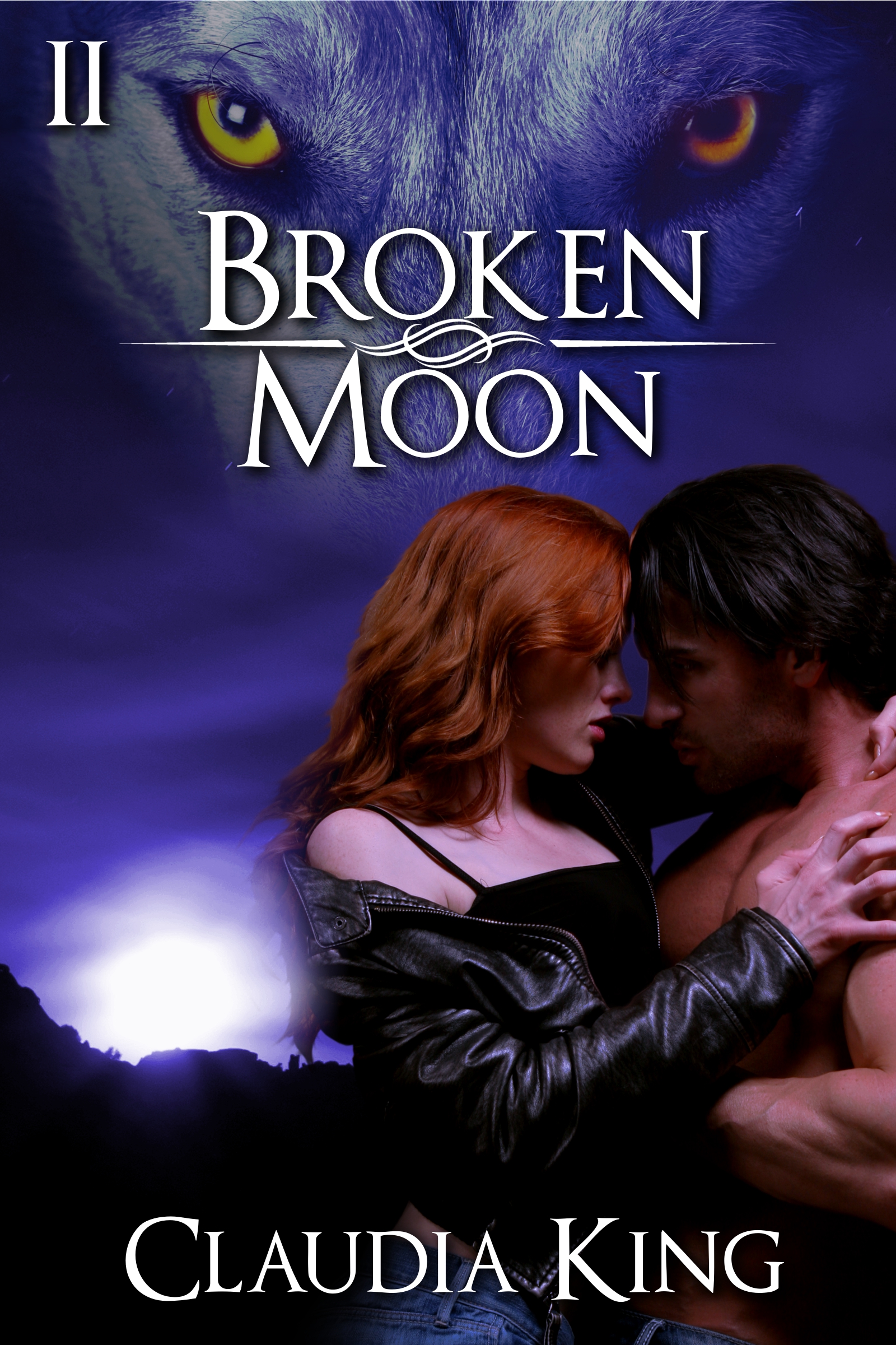
Broken Moon Part 3 Published!

Part three of my latest serial is all done and available to purchase on Amazon and Smashwords! We're a third of the way through, and conflicts are starting to kick off for April and Cyan as their relationship develops.

Time has passed for April since the night that changed her life forever, but the reality of her situation is still only just beginning to set in. She must adapt, find a new mate, and continue on as a dutiful female to her pack.
  Still an outsider to the insular Highland wolves, Cyan is unable to leave April to face her fate alone after the night they shared together, but there is little he can do to save her from a life he knows she will live to regret.
  The Highland Pack are beginning to question their leadership, their traditions and future becoming unclear, and amidst all of their upheaval there is only one simple, impulsive desire for both April and Cyan to seek comfort in. A forbidden desire, and one which will have severe consequences for both of them should they give in to it.

Besides the new release, things are ticking along more or less as normal. I'm focusing pretty explicitly on Broken Moon for the time being, though the re-editing of Wild Instincts is still a job on the back burner that I'm getting along with. I've got a few final tax thingies to sort out with Smashwords so that I can finally grab all of my money from them, but once that's out of the way I should be pretty much set up with everything I need as an indie author going forward.

More of my back catalogue should be coming to ArE in the near future as well, along with more blog posts as per usual!

Thursday, 9 January 2014

Subtlety: The Art of Making Your Readers do the Hard Work

The image on the left tells a story without spelling it out for the viewer, and the beauty of it is that the story has far more potential by virtue of its ambiguity. Did the woman in the background set those glasses out? Is she waiting for a companion to join her? Is he or she late? Has she already been waiting for hours? Is she leaving, abandoning those glasses on the beach after a lover failed to join her? Or perhaps she has nothing to do with the glasses at all. Perhaps someone else set them out, left them abandoned, and the woman in the background is just a passer by, failing to notice this bittersweet sight as the sun slowly goes down on our two glasses.

This photo is subtle in what it implies, and as a result we the viewers are given the task of doing the leg work to attribute meaning and narrative to it. Subtlety is a wonderful technique to employ in the arts, because it allows the artist to convey ideas that go beyond what they're capable of showing directly.

Readers will always, *always* have their own personal preferences when it comes to a story, and most of us will have small details about even our favourite titles that we'd love to see changed. With a little subtlety, an author is able to fulfil those personal wishes of the reader and speak to them in a way that would otherwise be impossible to convey in words.

Perhaps the most direct examples of effective subtlety can be found within the horror genre. Horror is a deeply personal thing; what scares one person can often be laughable to another. I myself am a massive arachnophobe, yet there are plenty of people who keep the very creatures I find terrifying as cherished pets. This is why a lot of the most effective horror is subtle and ambiguous. We will always scare ourselves far better than another person will be able to, since our deepest fears are always so intimate and personal. It's why a good horror movie hides the reveal of the monster until the last moment; the monster is always far, far scarier when we don't know what it looks like, when we're doing the hard work of creating its image in our own minds, rather than relying on the film makers to do it for us.

A little bit of ambiguity and subtlety offers the audience a challenge, a little puzzle to figure out in their own head, and the reward for solving it is an experience that speaks to you on a more personal level than any artist will ever be able to convey directly.

Of course, getting subtlety right is no easy feat. Too much ambiguity and your audience will start to get confused and disconnected from the experience; too little and it runs the risk of becoming predictable and boring. This is linked in very closely with the adage of Show vs Tell. Showing implies a degree of subtlety, conveying information via association rather than laying it out in black and white for the audience to see, whereas telling offers little to no ambiguity at all.

While conventional wisdom prizes showing over telling, a good author knows that both of these techniques have their own time and place, just as a good author knows just how much subtlety is appropriate in their work.

One of my favourite examples of this is Peter Cheung's 1995 animated series Aeon Flux, a show wherein every episode is heavily driven by metaphor and thematic significance on a visual, narrative, and character level. In fact, this show is so subtle and frantically paced that it often becomes very difficult to follow. It's hard to sit back and enjoy the episodes as individual stories, because your brain has to be constantly double-checking what's happening in every scene to make sure you're not missing something important. On an artistic level it's an incredibly interesting show, but on a pure entertainment level it often succeeds in being too artistic for its own good.

So subtlety is a fine line to tread, and it's certainly something that I'm hoping to get better at myself as a writer this coming year. It's one of those things that really has the potential to cripple and elevate your work in equal measures, but when you get it right, it's one of the most powerful ways for an author to connect with their readers. When you take a story off the page and into the reader's mind, make them think and consider and interpret, then you really start to reach a place that goes beyond simple entertainment value.

Tuesday, 31 December 2013

Killing Main Characters, feat. The Deathly Hallows and Star Wars


Happy New Year everyone! What better way to see in 2014 than to talk about MURDERING YOUR CHARACTERS.

The way an author handles character death is often one of the most contentiously discussed issues amongst readers (and writers), and with good reason. Most people aren't particularly bothered when a nameless soldier or a snarling orc drops as part of a story's natural cannon-fodder quota, but when it comes to characters we've come to know and love over the course of a story, saying goodbye to some of our favourite fictional creations can prove to be very difficult indeed.

Some people are dead-set against killing main characters. They see it as unpleasant and emotionally trying; the sort of thing they'd rather avoid in their leisure time as much as possible. I'm the same way myself when it comes to certain sensitive topics, but I realise that that's a personal preference rather than one that should govern storytelling in general. Killing off main characters can be done in both the Right and the Wrong way, and I'd love to spend just a few minutes discussing the difference between the two.

So first off, why do we kill characters in stories? Like anything, it's to evoke an emotional response and/or move the story forward (ideally both). However, unlike most other plot devices, the killing of an established character draws a line under something you've spent pages, chapters, or even entire books building up. It's a risky move. You're building the most intricate house of cards you possibly can just so that watching it fall down will be all the more impressive when it finally happens. You need to time that final moment perfectly, and if it happens either too early or too late you're going to leave people feeling cheated and unsatisfied.

For me, one of the most horribly misused instances of character death in fiction happens at the end of Harry Potter and the Deathly Hallows. This has often proven to be a controversial opinion amongst the people I've discussed it with, but I firmly stand by my viewpoint on it to this day.

Without spoiling anything too much, at the end of the final Harry Potter book we're treated to an epic final confrontation in which a large number of supporting characters (many of whom have been present since very early on in the series) are killed off. On paper, this seems fine. It's the climactic instalment in a long-running series; the stakes must be raised, the drama must be heightened, and the tension must be stretched to breaking point, where the previously unthinkable happens and our heartstrings are wrenched in a way we've never experienced before.

The problem lies entirely in the execution. These character deaths are not relayed as a tense and dramatic series of events during the final confrontation; they are listed off after the plot has been resolved, like an obituary report. There is no room for the audience to take in the dramatic impact of what has happened, no room for the characters to grieve and be affected by their loss, no story to be progressed, and no tension to be heightened, since the plot has already been resolved by this point.

The strongest argument I've seen for the inclusion of these character deaths is one of tone. Deathly Hallows is the darkest instalment of a series that has grown progressively darker over time. Death, loss, and the brutal reality of Voldemort's new world order are all prominent themes by now. However, all of this happens in the final few pages of the book. By this point the tone has already been set, several main characters have died already (in far more appropriate manners), and it is far too late in the day to start turning the final book in the series into some grim statement on the realities of war. These deaths are further cheapened by the "happily ever after" epilogue that immediately follows, completely sweeping away any kind of tonal or thematic significance they might have had and leaving the loss of these well-loved characters feeling hollow and pointless.

In contrast, let's look at an example of character death being used appropriately in a story. I'm sure everyone is familiar with the original Star Wars, and the death of Ben Kenobi at the climax of the movie's second act. This is a death that serves many significant purposes not just in the narrative of the first movie, but its subsequent sequels as well.

First and foremost: Making the villain threatening. Darth Vader is often heralded as one of the greatest fictional Bad Guys of all time, a character that we love to hate, and this is in no small part due to his immensely threatening presence. When Vader kills Ben, we are shown in a very direct and visceral way that he is a force to be reckoned with. He defeats the wisest, most competent, and perhaps most morally upstanding character in the story, setting himself up as a foe who has not only ripped away the most grounding part of the central cast, but also as someone who is beyond even the most competent and effective member of our group of heroes.

Ben's death is also hugely significant in Luke's character development as the story's protagonist. As the movie enters its final act Luke is forced to stand on his own two feet for the first time in the story, without the guidance of an older, wiser voice of reason. He ceases to be a boy and becomes a man, proving that he is capable of succeeding beyond Ben's instruction. This also sets the stage for Luke's more rebellious and emotionally driven confrontation with Vader in the sequel, giving their duel far more emotional context and depth than a simple flashy lightsaber fight, and going on to enhance the impact of the "I am your father" moment, and the relationship the two characters then develop in the final movie.

The story of Star Wars as a whole is enhanced and enriched by Ben's death, whereas the same cannot be said for the myriad of deaths that occur at the end of Harry Potter and the Deathly Hallows.

If you're gonna kill off your main characters you'd better be darn sure it's happening in service to the story at hand, because by default your audience is going to react negatively to it. Make that emotional investment worth it. Make it pay off, make it affect the story to come, make it influence our perception of characters and their motivations, and for goodness sake give us the breathing room to take in what has happened and have our own little emotional moment of grief and catharsis afterwards.

I could go on to talk about things like the effectiveness (and lack thereof) of shock value in fiction, but I think this post is already running on, so I'm going to leave it at that for now!
Happy New Years once again everyone, and I hope you all have a fantastic end to 2013!
Saturday, 21 December 2013

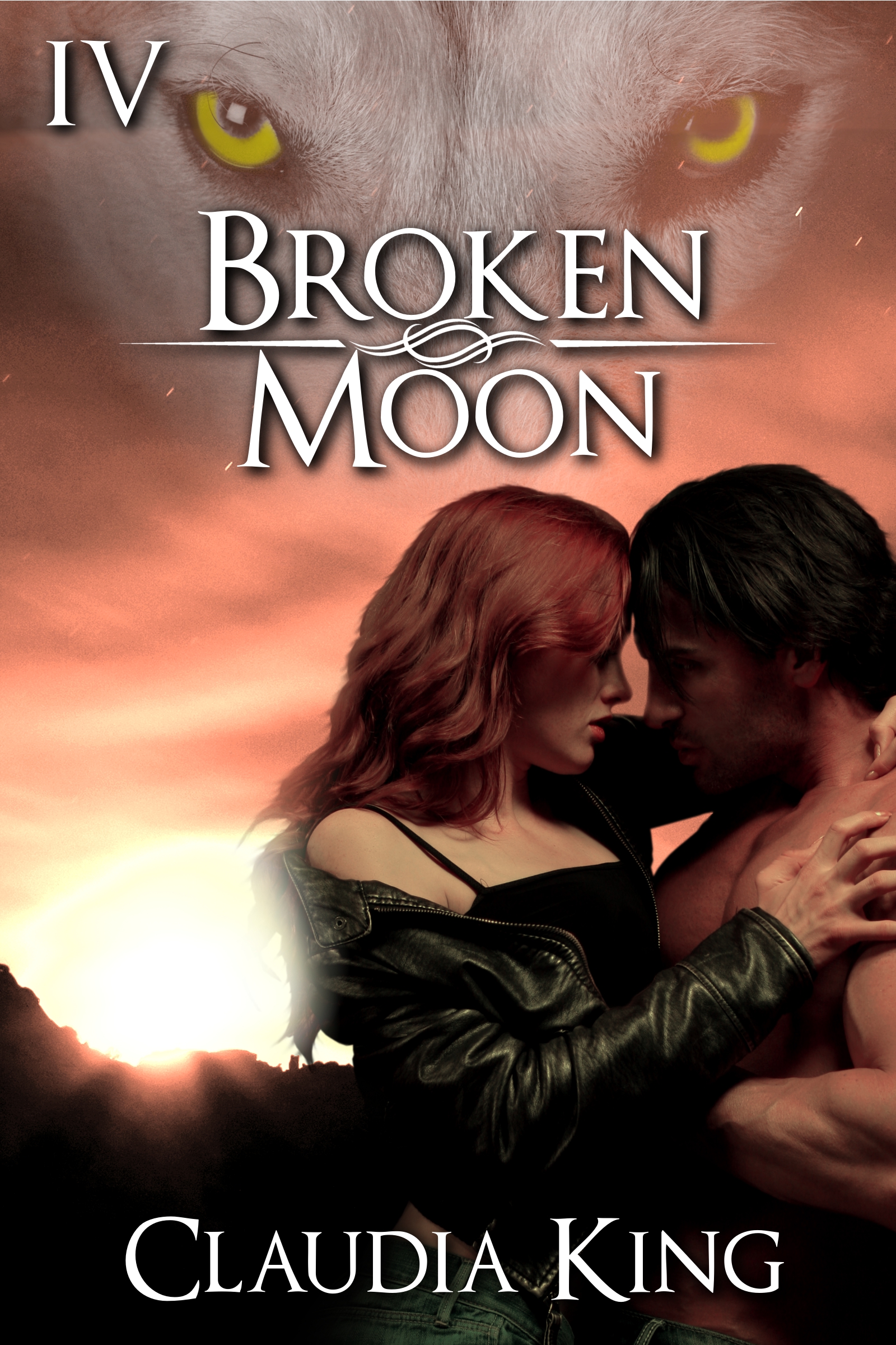
Broken Moon Part 2 Published, and Merry Xmas!

Oops, I'm a little late with this one, but part two of Broken Moon is all done and available to purchase on Amazon and Smashwords, with other retailers to follow! Things are heating up in this chapter as the scene-setting starts to give way to relationships, emotions, and conflicts!

Still reeling from her life-shattering loss, alone on the mountain slopes and at the mercy of vicious feral werewolves, April is forced to confront the most terrible night of her life cut off from the support of her pack. Her only companion and protector is Cyan; the outsider, and perhaps the only person to whom she can reveal her conflicted feelings about her life back home. Cyan's involvement with the Highland Pack is about to become something more than a passing stay, and his night spent with April will mean dangerous consequences for both of them.

And on that note, it's time for me to disappear for Xmas! Things have been a little hectic this month, and I've been focusing more on writing than blog posts, but hopefully I can get things up and running again in the new year. I probably won't be getting much work done over the holidays, but I'm going to bring some editing on Wild Instincts: The Novel with me in case I have some quiet moments in between family gatherings and seasonal dinners!

Merry Xmas everyone, and have a lovely time! I hope Santa brings you everything you want this year!